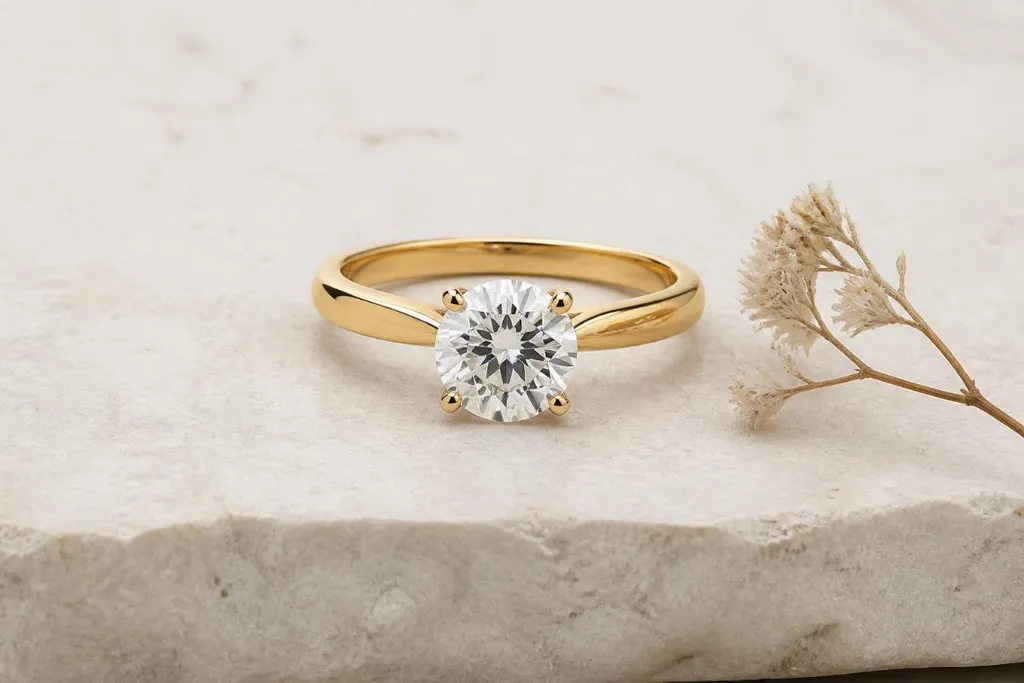
Yellow gold has an unmistakable warmth. While engagement ring trends have moved between cool white metals, mixed-metal designs and contemporary finishes, yellow gold has retained a loyal following because it offers something difficult to imitate: a naturally rich colour with centuries of fine-jewellery heritage behind it.
For British buyers, hallmarked yellow gold engagement rings bring another consideration into the decision. Hallmarking provides independent verification of precious-metal fineness, while the gold itself gives an engagement ring a warm backdrop that can transform the appearance of diamonds, lab-grown diamonds and other gemstones. Its enduring popularity is therefore not simply nostalgic; yellow gold remains both visually versatile and practical for jewellery intended to be worn every day.
What Hallmarking Means for Yellow Gold
Pure gold is naturally soft, so engagement rings are made from gold alloys rather than 24-carat gold. The gold is combined with other metals to achieve the strength, colour and working properties required for fine jewellery.
In the UK, qualifying precious-metal jewellery must be independently tested and hallmarked. The fineness mark indicates the proportion of pure gold within the alloy. For example, 18-carat gold is commonly marked 750, representing 750 parts of pure gold per thousand.
A UK hallmark can also include a sponsor's mark and the identifying symbol of the assay office responsible for testing the item. These marks are small, but their purpose is significant: they provide independent confirmation that the metal meets the stated standard.
For an engagement ring intended to last for decades, that verification adds useful assurance beyond appearance alone.
Yellow Gold Creates Natural Contrast With Diamonds
One reason yellow gold remains so effective in engagement ring design is the contrast it creates around a bright centre stone.
A colourless diamond or lab-grown diamond can appear particularly crisp against a warm yellow band. Rather than attempting to blend visually with the stone, as platinum or white gold often does, yellow gold deliberately frames it.
Designers can use that contrast in different ways. A solitaire with a slender yellow gold band feels clean and traditional without necessarily appearing old-fashioned. Diamond-set shoulders create a richer surface, with bright stones standing out distinctly against the gold beneath them. Halo and trilogy settings can become more decorative, as the yellow metal provides definition around multiple diamonds.
Some designs also combine a yellow gold band with a white-metal setting around the centre diamond. This can retain warmth on the finger while allowing the claws to appear less visually prominent against the stone.
Why 18-Carat Yellow Gold Suits Everyday Jewellery
For an engagement ring, appearance must be balanced with practical wear. Gold purity affects both colour and physical characteristics, which is why alloy choice matters.
Eighteen-carat yellow gold offers a high proportion of pure gold while incorporating other metals to provide greater suitability for jewellery construction. It retains the rich colour associated with gold but is more practical than pure 24-carat gold for a ring worn regularly.
It is still important to have realistic expectations. Yellow gold can scratch and develop surface marks over time, particularly on the underside of the band where it encounters desks and everyday objects. Those marks are a normal consequence of regular wear rather than an indication that the metal has failed. Professional polishing can refresh the surface when desired. Periodic inspection of claws and settings is also sensible, especially for rings worn continuously.
A Metal That Works Across Different Styles
Yellow gold's long history does not restrict it to traditional ring designs. In fact, its warmth can make contemporary diamond shapes especially striking.
Emerald, radiant and elongated cushion cuts gain definition against the contrasting metal. Oval and pear-shaped diamonds can feel romantic without becoming overly ornate, while round brilliant stones retain a familiar elegance. Band width also changes the character considerably. A fine yellow gold band can look delicate and modern, whereas a broader band gives the metal itself greater visual presence.
For a future bridal set, choosing the wedding ring at the same time or at least considering its profile and metal can help ensure both pieces look intentional together.
Final Thought
Yellow gold remains a favourite for engagement rings because its appeal extends beyond tradition. Its warm colour creates beautiful contrast, works across classic and contemporary settings, and develops character naturally through years of wear.
Hallmarking adds an important layer of assurance by independently confirming precious-metal fineness. Combined with thoughtful design and sensible maintenance, a hallmarked yellow gold engagement ring offers precisely what enduring jewellery should: recognisable beauty, practical wearability and a character that does not depend on passing trends.